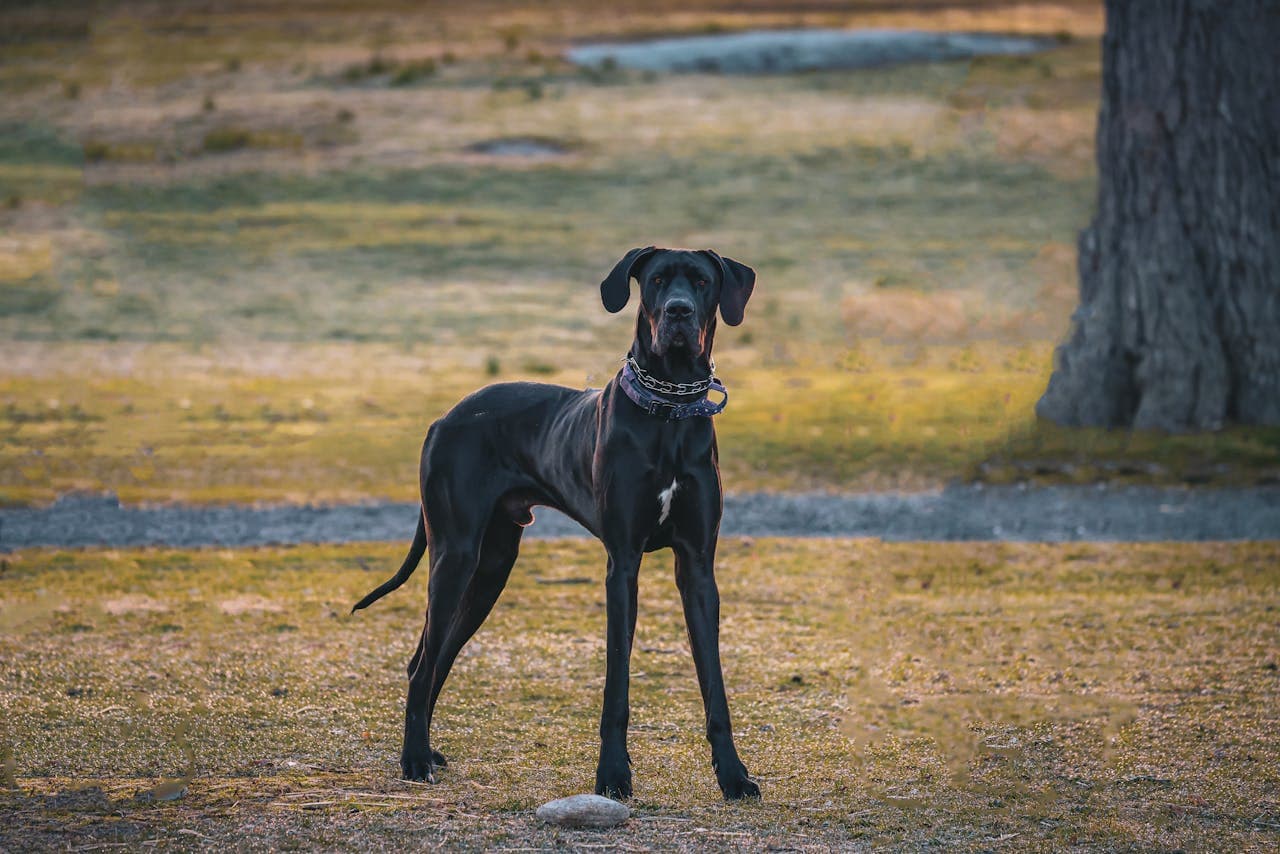
The Great Dane is a giant working breed known for its impressive height, gentle temperament, and striking, statuesque build. Originally developed in Europe as a boar-hunting and estate-guarding dog, modern Danes are far more likely to be affectionate house companions than big-game hunters. They combine a powerful, athletic frame with a surprisingly calm, people-oriented nature.
According to the American Kennel Club (AKC), Great Danes consistently rank among the most popular giant breeds. Their popularity comes from their sweet disposition, loyalty, and family-friendly personality. When raised with proper socialization, exercise, and health care, Danes are gentle, patient companions who enjoy moderate daily activity followed by long stretches of couch time at home.
Breed History & Origin
The Great Dane's ancestry traces back several centuries in Europe, particularly in Germany and surrounding regions. They were originally developed by crossing powerful mastiff-type dogs with athletic sighthounds, creating a strong, fast, and courageous boarhound capable of chasing and holding large game. Over time, selective breeding shifted their purpose from hunting to estate guardians and distinguished companions for nobility.
In the 19th century, fanciers refined the breed's appearance and temperament, favoring a more elegant outline and a steady, controllable disposition over raw hunting aggression. Germany became the center of Great Dane development, and the breed standard was formalized there before being adopted by kennel clubs worldwide. The AKC recognized the Great Dane in 1887. Today, while they retain the strength and presence of their working ancestors, most Danes are cherished as gentle family companions, show dogs, and therapy dogs.
Physical Characteristics & Breed Standards
Great Danes are one of the tallest dog breeds in the world. According to the AKC breed standard, they should present a combination of power, elegance, and balance, never appearing coarse or clumsy. The ideal Dane has a long, rectangular head, strong neck, deep chest, and well-angulated hindquarters that allow for free, efficient movement. Their appearance should be regal and confident, reflecting their nickname as the “Apollo of dogs.”
| Characteristic | Male | Female |
|---|---|---|
| Height | 30–34 inches (minimum 30" at shoulder) | 28–32 inches (minimum 28" at shoulder) |
| Weight | ~140–175+ pounds (varies by build) | ~110–140+ pounds (varies by build) |
| Lifespan | 7–10 years on average | |
| Coat Type | Short, smooth, and glossy; single coat lying close to the body | |
| Common Colors | Fawn, brindle, blue, black, harlequin, mantle, merle (colors and markings per AKC standard) | |
Key Physical Features: Great Danes have a long, narrow head with parallel planes and a well-defined stop. The muzzle is deep and strong, and the eyes are medium-sized, dark, and expressive, conveying an intelligent, friendly expression. Ears may be natural (folded) or cropped (where legal), standing erect. The chest is deep, reaching to the elbows, and the body is slightly longer than tall with a firm topline. Their powerful, ground-covering gait should appear easy and effortless, never lumbering or clumsy.
Temperament & Personality
Great Danes are often described as gentle giants. They are typically friendly, affectionate, and eager to be close to their people, frequently believing themselves to be lap dogs despite their size. Most Danes are calm indoors, preferring to lounge near their family, but they do enjoy regular play and moderate exercise.
Danes are usually good-natured with strangers, though many have a natural guarding instinct and will alert their owners to unfamiliar sounds or visitors. Proper socialization helps them remain confident and stable rather than fearful or overprotective. They generally get along well with children when raised together, but their size means supervision is important around small kids to prevent accidental knockdowns.
Great Danes thrive on companionship and can be prone to separation-related stress if left alone for long periods. They do best as true family members who share the home, not as outdoor or kennel dogs. Their combination of sensitivity and size makes positive, consistent training and gentle handling essential.
Exercise Requirements by Life Stage
As a giant working breed, Great Danes need regular exercise to stay fit and mentally balanced, but their activity must be carefully managed—especially during growth—to protect their joints. While they are not as endlessly high-energy as some herding breeds, they are large, powerful dogs that require daily walks, playtime, and enrichment to prevent boredom and restlessness.
| Life Stage | Daily Exercise | Recommended Activities |
|---|---|---|
| Puppies (8 weeks - 18 months) | Short, frequent sessions; avoid high-impact or forced running | Gentle walks, controlled play on soft surfaces, basic obedience, socialization, low-impact brain games |
| Adults (18 months - 6 years) | ~45–90 minutes total, split into 2–3 sessions | Leashed walks, moderate hiking, off-leash play in secure areas, light jogging (after maturity), obedience, nosework, casual dog sports |
| Seniors (6+ years) | 20–45 minutes of gentle activity, adjusted for health | Short, leisurely walks, gentle play, swimming if joint-friendly, low-impact enrichment and brain puzzles |
Mental Exercise: While Great Danes may not be as hyper-driven as some working breeds, they still benefit from mental challenges. Incorporate puzzle feeders, basic and advanced obedience, scent games, and interactive toys. Many Danes enjoy therapy work, obedience, and low-impact sports that emphasize teamwork and focus rather than speed and jumping.
Grooming & Maintenance Schedule
Great Danes have a short, smooth coat that is relatively easy to maintain. They are moderate year-round shedders, and while their hair is short, their sheer size means there can be a lot of it. Regular grooming helps keep their coat healthy, reduces shedding, and provides an opportunity to check for skin issues, lumps, or injuries on such a large body.
| Grooming Task | Frequency | Tools/Notes |
|---|---|---|
| Brushing (regular season) | 1–2 times per week | Rubber curry brush or grooming glove to remove loose hair and stimulate skin |
| Brushing (shedding peaks) | Several times per week | Rubber brush or de-shedding tool used gently across the body |
| Bathing | Every 6–8 weeks or as needed | Use dog-specific shampoo; thoroughly rinse and dry, paying attention to skin folds if present |
| Nail trimming | Every 2–3 weeks | Use sturdy clippers or grinder; long nails can affect gait and joint comfort, especially in giant breeds |
| Ear cleaning | Weekly check, clean as needed | Veterinary ear cleaner and cotton balls; watch for redness, odor, or discharge |
| Dental care | Daily (ideal) or at least 3x per week | Dog toothbrush and toothpaste; add dental chews or rinses as recommended by your vet |
Nutrition & Feeding Guidelines
Proper nutrition is especially critical for Great Danes due to their rapid growth and giant size. They require high-quality diets that support steady, controlled growth in puppies and maintain lean body condition in adults. Overfeeding or providing diets that are too energy-dense can contribute to joint problems and shorten lifespan in giant breeds.
| Life Stage | Protein | Fat | Daily Amount (Dry Food) | Meals/Day |
|---|---|---|---|---|
| Puppies (2–18 months, giant-breed formula) | ~22–26% (from controlled calcium, large/giant-breed puppy diets) | ~10–16% | Varies widely with age/weight; follow vet and large-breed puppy food guidelines closely | 3–4 (gradually reduced to 2–3 by adulthood) |
| Adults (moderately active) | ~22–26% | ~10–16% | Often ~4–8 cups per day (split into meals), depending on food density and individual size; adjust to maintain lean condition | 2–3 |
| Adults (higher activity/working) | 24–28% | 14–18% | Amount adjusted for workload and body condition; always monitor for excess weight | 2–3 |
| Seniors (6+ years) | 18–24% | 8–14% | Typically somewhat reduced from adult amounts; tailored to keep them lean and protect joints | 2–3 |
Essential Nutritional Considerations: Choose diets specifically formulated for large/giant breeds, especially during growth, with controlled calcium and appropriate energy density. High-quality animal proteins (such as chicken, beef, lamb, or fish) should be among the first ingredients. Omega-3 and Omega-6 fatty acids support joint, skin, and coat health. Many Great Danes also benefit from joint-support supplements containing glucosamine, chondroitin, and EPA/DHA. Work closely with your veterinarian to fine-tune calories, especially if your Dane is still growing or has orthopedic or cardiac concerns.
Bloat Prevention: Great Danes are one of the breeds at highest risk for gastric dilatation-volvulus (GDV or bloat), a life-threatening emergency where the stomach fills with gas and may twist. To reduce risk, feed multiple smaller meals per day rather than one large meal, discourage rapid gulping of food (use slow-feeder bowls if needed), and avoid heavy exercise or rough play for at least an hour before and after meals. Discuss with your veterinarian whether a preventative gastropexy (surgical tacking of the stomach) is appropriate, especially if your Dane is undergoing spay/neuter surgery. Seek immediate emergency care if you suspect bloat—minutes matter.
Health Considerations & Genetic Screening
Great Danes are generally affectionate and resilient, but like many giant breeds, they are predisposed to certain inherited and size-related health conditions. Responsible breeders use health testing, careful selection, and thoughtful breeding practices to reduce risk. Prospective owners should be familiar with common health concerns and always ask for documentation of health clearances on breeding dogs and close relatives.
Common Health Conditions
| Condition | Prevalence | Description |
|---|---|---|
| Hip Dysplasia | Significant breed risk in giant dogs | Abnormal hip joint development that can lead to pain, arthritis, and reduced mobility |
| Elbow Dysplasia & Other Orthopedic Issues | Recognized risk | Developmental abnormalities affecting elbows, shoulders, or spine; may cause lameness or chronic pain (includes conditions like Wobbler syndrome) |
| Dilated Cardiomyopathy (DCM) | Important breed concern | Heart muscle disease in which the heart becomes enlarged and weak; can lead to heart failure or sudden collapse |
| Gastric Dilatation-Volvulus (Bloat/GDV) | Very high risk in Great Danes | Life-threatening emergency where the stomach fills with gas and may twist; requires immediate veterinary intervention |
| Autoimmune Thyroiditis / Hypothyroidism | Documented in the breed | Immune-related thyroid disease that can cause weight gain, lethargy, and skin or coat changes |
| Hereditary Eye Diseases | Recognized concern | Includes conditions such as cataracts and other inherited eye problems that can impair vision |
AKC Recommended Health Screenings
The AKC and Great Dane breed organizations recommend health testing for breeding dogs. When purchasing a puppy from a breeder, ask for copies of official health clearances and be sure they are recent and verifiable:
| Screening Test | Testing Authority | Purpose |
|---|---|---|
| Hip Evaluation | OFA or PennHIP | Screen for hip dysplasia and assess joint quality in a giant, fast-growing breed |
| Elbow Evaluation | OFA | Screen for elbow dysplasia and related orthopedic issues |
| Cardiac Evaluation | OFA, board-certified veterinary cardiologist, echocardiogram | Screen for dilated cardiomyopathy (DCM) and other structural heart diseases |
| Ophthalmologist Evaluation | ACVO/OFA Eye Certification | Screen for hereditary eye diseases, including cataracts and other structural eye defects |
| Thyroid Evaluation | OFA or certified laboratory | Screen for autoimmune thyroiditis and hypothyroidism, which can affect energy and coat health |
Training & Socialization
Great Danes are intelligent and eager to please, but their size makes early training and socialization absolutely essential. A poorly mannered 150-pound dog can be difficult to manage, even if their intentions are friendly. With positive, consistent guidance, Danes typically learn quickly and become polite, cooperative companions.
Early Socialization: Begin socialization as early as possible, ideally between 3–14 weeks of age, and continue well into adolescence. Introduce your Great Dane puppy to a variety of people, friendly dogs, environments, and everyday noises in a controlled, positive way. Focus on calm, confident behavior in new situations so they grow into steady adults who are not fearful or reactive in public spaces.
Training Approach: Use positive reinforcement—food rewards, praise, and play—to teach foundational cues like sit, down, stay, come, and loose-leash walking. Harsh corrections are not necessary and can damage trust in a sensitive giant breed. Because of their size, special emphasis should be placed on household manners (no jumping, polite greetings, waiting at doors) and calm leash skills from a young age.
Recommended Training Programs: Puppy kindergarten, basic manners classes, and AKC S.T.A.R. Puppy are excellent starting points. Many Danes go on to earn Canine Good Citizen (CGC) and Community Canine (CGCA) titles, and some enjoy activities such as rally, obedience, and therapy work. These outlets help reinforce good manners and deepen the bond between dog and owner.
Working Roles & Capabilities
Great Danes are no longer commonly used as big-game hunters, but their intelligence, size, and gentle, people-focused nature allow them to excel in several modern roles:
- Family Guardians: Their impressive size and deep bark make them natural deterrents to intruders, even though well-bred Danes are typically friendly and stable in temperament.
- Companion & House Dogs: Most Great Danes are primarily beloved family members, content to spend most of their time indoors, relaxing near their people and joining family activities.
- Therapy Dogs: Many Danes have the calm demeanor and affectionate nature that suit them well for therapy visits to hospitals, nursing homes, and schools, provided they have solid training and socialization.
- Obedience & Rally: While they may not be the fastest competitors, Great Danes can earn titles in obedience and rally, showcasing their responsiveness and teamwork with their handlers.
- Low-Impact Dog Sports: Some Danes participate in sports like nosework, tracking, or carting, which emphasize mental engagement and strength rather than jumping or high-impact movement.
Frequently Asked Questions
Are Great Danes good family dogs?
Yes, Great Danes can be wonderful family dogs when properly bred, socialized, and trained. They are typically affectionate, gentle, and patient with children, often forming very strong bonds with their families. Because of their size, supervision around small kids is important to prevent accidental bumps or knockdowns. Families must also be prepared for the financial responsibility of caring for a giant breed, including higher food and veterinary costs.
How much does a Great Dane puppy cost?
Prices vary by region, pedigree, and breeder practices. From reputable breeders who perform health testing, provide appropriate early veterinary care, and raise puppies in a high-quality environment, Great Dane puppies often range from around $1,500–$3,000 or more. Puppies from show or performance lines may be higher. Be cautious of unusually low prices, which can signal poor breeding practices, lack of health testing, or insufficient care during critical growth periods.
Do Great Danes shed a lot?
Great Danes have short coats, but they are moderate shedders. You may notice more hair during seasonal shedding peaks. Weekly brushing (and more frequent grooming during heavy shedding) helps reduce loose hair and keeps the coat shiny. Because of their size, even moderate shedding can add up, so prospective owners should be comfortable with some dog hair on clothes and furniture.
Are Great Danes aggressive?
Well-bred, well-socialized Great Danes are not inherently aggressive. The ideal Dane is friendly, confident, and dependable. They may be watchful and protective of their home and family, but unprovoked aggression is not typical of the breed. As with any dog, poor socialization, fear, pain, or harsh handling can contribute to behavior problems. Early positive training and responsible breeding are key to maintaining the breed's gentle reputation.
Can Great Danes live in apartments?
Great Danes can adapt to apartment living if their exercise, training, and space needs are thoughtfully managed. They are often calm indoors and do not require constant high-intensity activity, but they do need daily walks, opportunities to stretch out, and room to lie comfortably. Owners must be committed to multiple daily outings, elevator or stair training, and careful consideration of building rules regarding giant breeds. Having access to safe outdoor areas is very helpful.
What is the difference between European and American Great Dane lines?
Some breeders and fanciers distinguish between “European” and “American” Great Dane lines. In general, European lines may emphasize heavier bone, broader heads, and a more massive overall appearance, while American lines may lean toward a slightly more refined, athletic outline in keeping with the AKC standard. Temperament, health, and individual breeder priorities vary widely within both groups. When choosing a puppy, focus less on labels and more on health testing, sound structure, stable temperament, and a breeder whose goals align with your lifestyle.
Is a Great Dane Right for You?
Great Danes are best suited for:
- Families or individuals who want a calm, affectionate giant companion in the home
- Owners who can manage and train a very large, powerful dog from puppyhood
- People prepared for the higher ongoing costs of a giant breed (food, bedding, veterinary care, and medications)
- Households that can provide daily walks, moderate exercise, and plenty of time spent together indoors
- Homes with enough physical space for a large dog to move around and stretch out comfortably
- Owners committed to early socialization, positive training, and regular veterinary monitoring
- People comfortable with a shorter average lifespan and willing to prioritize quality of life and preventive health care
Great Danes may not be ideal for owners who prefer very low-maintenance pets, are frequently away from home, or are not comfortable with the physical and financial realities of caring for a giant dog. For the right family, however, a well-bred, well-cared-for Great Dane can be an incredibly loving, unforgettable companion.
References & Resources
- 1. American Kennel Club (AKC). "Great Dane Breed Standard." akc.org
- 2. Great Dane Club of America (GDCA). "Health & Breed Information."
- 3. Orthopedic Foundation for Animals (OFA). "Breed Statistics for Great Danes."
- 4. AKC Canine Health Foundation. "Dilated Cardiomyopathy in Large and Giant Breeds."
- 5. Various veterinary internal medicine and nutrition resources on giant-breed growth and diet.
- 6. Veterinary emergency medicine references on gastric dilatation-volvulus (GDV/bloat) prevention and management.
- 7. Great Dane breed club guidelines on responsible breeding, health testing, and care.