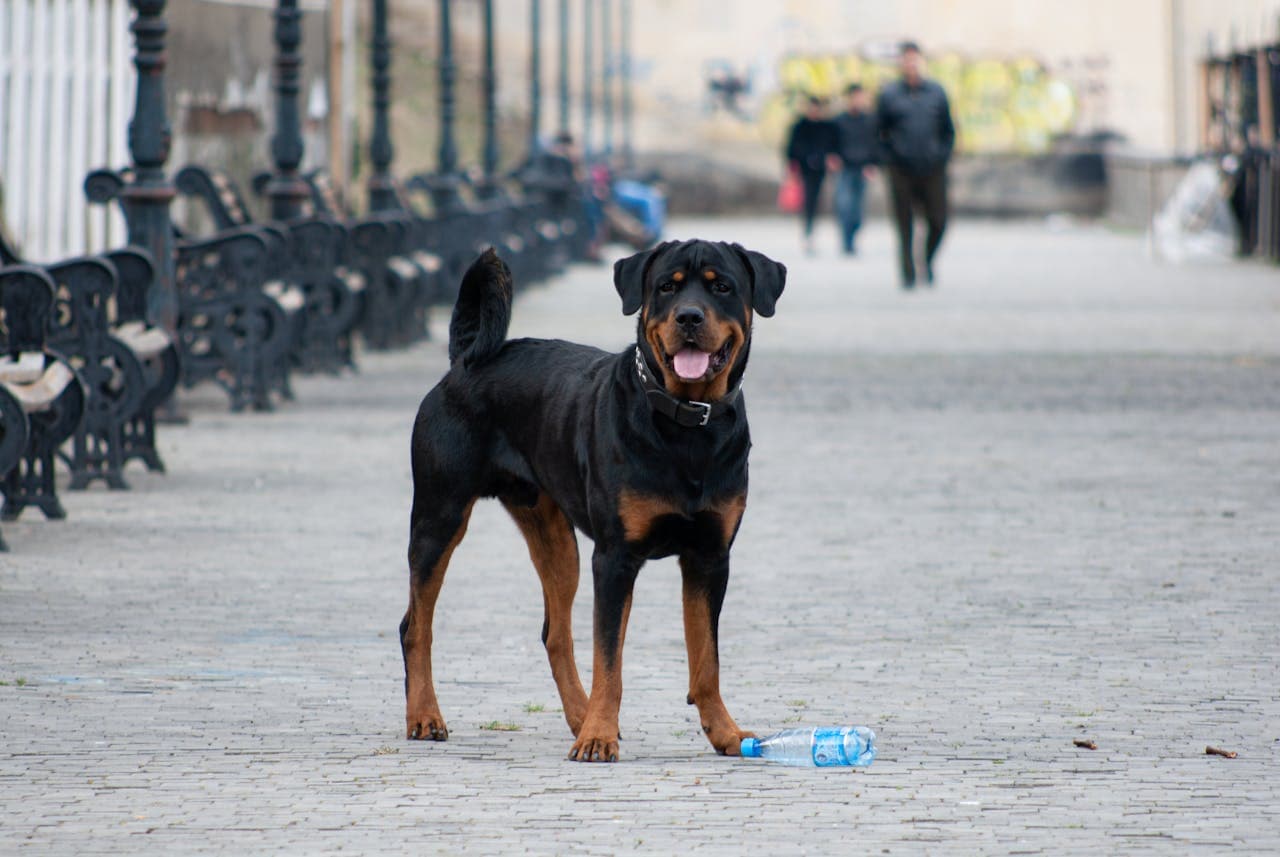
The Rottweiler is a powerful, medium-to-large working breed known for its strength, confidence, and steady temperament. One of the oldest herding and drover dog types, Rottweilers were historically used to move cattle to market and guard the cattle, carts, and their owner's money. Today, they are valued as guardians, companions, and versatile working dogs in a variety of roles.
According to the American Kennel Club (AKC), Rottweilers are consistently among the most popular large breeds. Their popularity stems from their deep loyalty to their families, natural protective instincts, and adaptability as both working dogs and companions. In the right hands, with careful socialization, training, and responsible management, Rottweilers can be calm, affectionate family dogs who take their job of watching over home and loved ones seriously.
Breed History & Origin
The Rottweiler's roots trace back to the drover dogs that accompanied Roman legions as they marched across Europe, driving and guarding cattle that served as food for the armies. As the Romans moved into what is now southern Germany, these dogs crossed with local working dogs and evolved into a distinct type used around the town of Rottweil, a major cattle trading center. These robust dogs became known as "Rottweiler Metzgerhund" (Rottweil butcher's dogs) for their role in driving cattle and guarding the butcher's money.
With the advent of rail transport, the need for cattle-driving dogs declined, but the Rottweiler found new purpose as a police, military, and guard dog thanks to its strength, intelligence, and courage. The breed standard was developed in Germany, and the Rottweiler continued to gain international recognition throughout the 20th century. The AKC recognized the Rottweiler in 1931, and today the breed is widely used in protection work, search and rescue, service and therapy roles, and as a devoted family guardian.
Physical Characteristics & Breed Standards
Rottweilers are medium-to-large, strongly built dogs with a compact, muscular body and substantial bone. According to the AKC breed standard, they should present an overall picture of strength and endurance—neither heavy and clumsy nor light and weedy. Their movement is powerful, confident, and efficient, reflecting their heritage as a driving dog capable of working all day.
| Characteristic | Male | Female |
|---|---|---|
| Height | 24–27 inches | 22–25 inches |
| Weight (typical range) | 95–135 pounds | 80–100 pounds |
| Lifespan | 9–10 years (some live longer with excellent care) | |
| Coat Type | Short to medium-length, dense, straight, and coarse double coat | |
| Common Colors | Always black with clearly defined rust to mahogany markings in specific locations (cheeks, muzzle, chest, legs, and beneath tail) | |
Key Physical Features: Rottweilers have a broad head with a moderately arched forehead and a well-developed, strong muzzle. Their eyes are medium-sized, almond-shaped, and dark brown, giving a confident, alert expression. Ears are medium, triangular, and carried forward, creating a broad skull appearance when attentive. The breed has a strong neck, broad chest, and level topline. The tail is typically carried horizontally when alert; docking practices vary by country and local laws. Their gait is balanced, powerful, and ground-covering, showing great strength and endurance.
Temperament & Personality
Rottweilers are known for their calm confidence, intelligence, and deep loyalty to their families. The AKC describes the ideal Rottweiler temperament as self-assured, fearless, and steady, with a natural instinct to guard. Well-bred Rottweilers are neither shy nor unnecessarily aggressive; they tend to be reserved with strangers but devoted and affectionate with their people.
Because of their protective nature and physical strength, early and ongoing socialization is critical. Rottweilers should be exposed positively to a wide variety of people, animals, and environments so they learn to distinguish normal situations from true threats. Clear boundaries, consistent training, and responsible handling are essential to prevent overprotective or pushy behavior.
Rottweilers are intelligent problem-solvers who enjoy having a job, whether that's obedience training, sport work, or simply being part of everyday family routines. They often bond strongly with their primary caregivers and enjoy close physical contact, making them surprisingly affectionate “velcro dogs” at home despite their imposing appearance.
Exercise Requirements by Life Stage
As a working breed, Rottweilers require regular exercise and mental engagement, but their needs are typically more moderate and controlled than some high-drive herding or sporting breeds. Proper exercise helps maintain a healthy weight, supports joint health, and provides an outlet for their energy and guarding instincts.
| Life Stage | Daily Exercise | Recommended Activities |
|---|---|---|
| Puppies (8 weeks - 12 months) | Short, frequent sessions; 5 minutes per month of age, 2x daily (avoid impact on growing joints) | Controlled leash walks, gentle play, basic obedience, socialization outings, low-impact games |
| Adults (1-7 years) | 1–2 hours total, split into sessions | Brisk walks, jogging (once physically mature), hiking, structured obedience, tracking, carting, protection sports (with professionals), interactive games |
| Seniors (7+ years) | 30–60 minutes, adjusted for mobility and health | Gentle walks, swimming, light play, scent games, low-impact training and enrichment |
Mental Exercise: Rottweilers benefit greatly from mental work as well as physical activity. Include obedience, trick training, nosework, tracking, puzzle toys, and problem-solving games in their routine. Many Rottweilers enjoy obedience trials, rally, carting, tracking, and other canine sports that allow them to use their brains and bodies in a structured way.
Grooming & Maintenance Schedule
Rottweilers have a short, dense double coat that is relatively easy to care for but does shed regularly. They typically shed moderately year-round and may have heavier seasonal shedding a couple of times a year. Routine grooming helps control loose hair, keeps the skin and coat healthy, and provides an opportunity to check for lumps, bumps, or skin issues.
| Grooming Task | Frequency | Tools/Notes |
|---|---|---|
| Brushing (regular season) | 1–2 times per week | Rubber curry brush or bristle brush; removes loose hair and distributes skin oils |
| Brushing (shedding season) | Several times per week | Undercoat rake or de-shedding tool for heavier seasonal shedding |
| Bathing | Every 6–8 weeks or as needed | Dog-specific shampoo; avoid over-bathing to prevent dry skin |
| Nail trimming | Every 2–3 weeks | Trim or grind; strong nails can overgrow quickly and affect gait |
| Ear cleaning | Weekly check, clean as needed | Veterinary ear cleaner, cotton balls; watch for redness, odor, or debris |
| Dental care | Daily (ideal) or at least 3x per week | Dog toothbrush and toothpaste; consider dental chews or water additives as recommended |
Nutrition & Feeding Guidelines
Proper nutrition is critical to support the Rottweiler's substantial muscle mass, joint health, and overall well-being. As a large, muscular working breed, Rottweilers do best on high-quality diets that emphasize animal-based protein, controlled calcium and phosphorus (especially during growth), and appropriate fat levels to match their activity.
| Life Stage | Protein | Fat | Daily Amount (Dry Food) | Meals/Day |
|---|---|---|---|---|
| Puppies (2–12 months, large-breed formula) | 22–26% | 8–15% | Varies by age/weight; follow vet and large-breed puppy food label guidance | 3–4 (smaller, controlled meals) |
| Adults (moderately active) | 18–24% | 10–16% | ~3–4 cups (split into meals), adjusted for weight, metabolism, and activity | 2 |
| Adults (highly active/working) | 24–30% | 15–20% | ~4–5 cups, adjusted for workload and body condition score | 2–3 |
| Seniors (7+ years) | 18–22% | 8–14% | 2.5–4 cups, tailored to activity level, weight, and joint health | 2 |
Essential Nutritional Considerations: Choose formulas that list high-quality animal proteins (such as chicken, beef, lamb, or fish) as the first ingredient. For Rottweiler puppies, large-breed-specific formulas help control growth rate and support proper skeletal development. Omega-3 and Omega-6 fatty acids, glucosamine, and chondroitin are beneficial for joint and coat health in this heavy, muscular breed. Because Rottweilers can be prone to obesity, monitor calories carefully and adjust portions based on body condition.
Bloat Prevention: As a large, deep-chested breed, Rottweilers are at increased risk for gastric dilatation-volvulus (GDV or bloat), a life-threatening emergency. To reduce risk, divide daily food into two or more meals, discourage rapid gulping of food (use slow-feeder bowls if needed), avoid heavy exercise for about an hour before and after meals, and discuss prophylactic gastropexy (preventive stomach tacking) with your veterinarian, especially if your dog has close relatives with a history of bloat. Seek emergency veterinary care immediately if you suspect GDV.
Health Considerations & Genetic Screening
Rottweilers are generally robust, but like all purebred dogs, they are predisposed to certain inherited conditions. Responsible breeders use health testing, pedigree research, and careful selection to reduce the incidence of these diseases. Prospective owners should be familiar with common health concerns and request documentation of health clearances for both parents.
Common Health Conditions
| Condition | Prevalence | Description |
|---|---|---|
| Hip Dysplasia | Significant breed risk | Abnormal hip joint development that can lead to arthritis, pain, and reduced mobility, especially in heavy dogs |
| Elbow Dysplasia | Notable breed concern | Developmental abnormalities in the elbow joint that may cause forelimb lameness and arthritis |
| Cardiac Disease (e.g., Subaortic Stenosis) | Recognized breed issue | Congenital heart conditions that can lead to heart murmurs, exercise intolerance, or more serious complications |
| Osteosarcoma (Bone Cancer) | Increased risk in large breeds | Aggressive bone cancer more common in large, heavy breeds; often affects limbs |
| Cruciate Ligament Disease | Documented in the breed | Injury or degeneration of the knee ligament that can lead to lameness and require surgery |
| Eye Diseases | Recognized concern | Includes entropion, cataracts, and other inherited eye conditions in some bloodlines |
AKC Recommended Health Screenings
The AKC and American Rottweiler Club (ARC) recommend specific health testing for breeding dogs. Always request copies of official health clearances when purchasing a Rottweiler puppy from a breeder:
| Screening Test | Testing Authority | Purpose |
|---|---|---|
| Hip Evaluation | OFA or PennHIP | Screen for hip dysplasia and assess hip joint quality |
| Elbow Evaluation | OFA | Screen for elbow dysplasia |
| Cardiac Evaluation | OFA with a veterinary cardiologist | Screen for congenital heart disease such as subaortic stenosis |
| Ophthalmologist Evaluation | ACVO/OFA Eye Certification | Screen for inherited eye conditions including cataracts and eyelid disorders |
| JLPP DNA Test (Juvenile Laryngeal Paralysis & Polyneuropathy) | OFA or other approved lab | Identify carriers and affected dogs to prevent producing puppies with this neurological disease |
| Additional DNA Testing (as recommended) | OFA or certified laboratories | Screen for other hereditary conditions identified in specific bloodlines |
Training & Socialization
Rottweilers are intelligent, willing workers who respond well to clear, fair, and consistent training. Their strength and guardian instincts make early training and socialization an absolute necessity, not an option. When guided properly, they can excel in obedience, protection sports, tracking, and many other activities.
Early Socialization: Begin socialization as early as possible, ideally between 3–14 weeks of age, and continue into adolescence. Expose your Rottweiler puppy to many different people, children, dogs, environments, and sounds in a controlled, positive way. This helps prevent fearfulness or inappropriate aggression and supports the development of a confident, stable adult guardian.
Training Approach: Positive reinforcement-based methods work best with Rottweilers. Use food rewards, toys, praise, and play to reward desired behavior, and avoid harsh punishment that can create fear or conflict. Rottweilers appreciate clear leadership and boundaries; consistent rules, structured routines, and calm, confident handling help them feel secure and cooperative.
Recommended Training Programs: Enroll in puppy kindergarten and basic manners classes early. Many Rottweilers are excellent candidates for AKC Canine Good Citizen (CGC) and advanced obedience titles. Under the guidance of experienced trainers, some may thrive in protection sports such as IPO/IGP, French Ring, or personal protection training—always with ethical, responsible oversight. Tracking, carting, rally, and therapy dog work are also rewarding outlets for this breed.
Working Roles & Capabilities
Rottweilers are versatile working dogs with a long history of performing demanding tasks alongside humans. Their physical power, intelligence, and strong nerves allow them to succeed in a wide range of modern roles:
- Guard & Protection Work: Rottweilers have a natural instinct to protect their home and family. With proper training and temperament, they can excel in protection sports and controlled guarding roles.
- Police & Service Work: In some regions, Rottweilers are used as police, customs, or military dogs due to their strength, courage, and trainability.
- Search & Rescue / Detection: Their keen noses and strong work ethic can make them suitable for tracking, search and rescue, and scent detection tasks.
- Carting & Draft Work: Historically, Rottweilers pulled carts loaded with goods. Modern carting and draft work provide a traditional outlet for their strength and stamina.
- Therapy & Emotional Support: Rottweilers with stable, gentle temperaments and good manners can serve as therapy dogs, offering comfort and companionship in hospitals, schools, and care facilities.
- Devoted Family Companions: For many owners, the Rottweiler's main job is being a loving, watchful family member who joins in daily activities, from walks and hikes to relaxing at home.
Frequently Asked Questions
Are Rottweilers good family dogs?
Yes, in the right homes, Rottweilers can be outstanding family dogs. They are typically deeply loyal, affectionate, and protective of their families. Many are gentle and patient with children they know. However, due to their size, strength, and guarding instincts, they require experienced, responsible owners who provide early socialization, consistent training, and supervision—especially around small children or unfamiliar visitors.
How much does a Rottweiler puppy cost?
Prices vary widely by region, pedigree, and breeder practices. From reputable breeders who perform all recommended health testing and raise puppies in a high-quality environment, Rottweiler puppies often range from around $1,500–$3,500 or more. Puppies from top working or show lines may cost higher. Be cautious of unusually low prices, which can be a red flag for poor breeding practices, lack of health screening, or irresponsible sellers.
Do Rottweilers shed a lot?
Rottweilers have a short coat but are moderate shedders. They shed year-round and often experience heavier seasonal shedding when they blow their undercoat. Regular brushing—at least weekly and more often during heavy shedding—helps manage loose hair and keeps the coat healthy. Prospective owners should be comfortable with some dog hair on clothes and furniture.
Are Rottweilers aggressive?
Well-bred, well-socialized Rottweilers are not indiscriminately aggressive. The ideal Rottweiler is confident, self-assured, and steady, with a natural instinct to protect but the judgment to remain calm when not truly threatened. Problems arise when dogs are poorly bred, improperly socialized, mishandled, or trained to be aggressive. Because of their strength and reputation, responsible ownership and early, ongoing training are absolutely essential with this breed.
Can Rottweilers live in apartments?
Rottweilers can live in apartments if their exercise, mental stimulation, and training needs are met, and if building rules and insurance allow the breed. They are often calm indoors once mature, but they need daily walks, structured exercise, and enrichment. Sound-proofing, elevator etiquette, and careful management around neighbors are important considerations for such a powerful guarding breed in close quarters. Many Rottweilers do best in homes with securely fenced yards, but lifestyle and owner commitment matter more than square footage alone.
What is the difference between working and show lines in Rottweilers?
Working-line Rottweilers are bred with emphasis on drive, working ability, and performance in sports or protection work. They may have higher energy, stronger defensive instincts, and require more structure and experienced handling. Show-line Rottweilers are bred for conformation to the breed standard and may have somewhat more moderate drive, though they are still powerful, active dogs. Both types need proper training, socialization, and management; the best choice depends on your experience level, goals, and lifestyle.
Is a Rottweiler Right for You?
Rottweilers are best suited for:
- Experienced dog owners comfortable handling a large, powerful breed
- Families who want a deeply loyal, protective companion and can provide clear leadership
- Owners committed to early and ongoing socialization, obedience training, and responsible management
- People able to provide at least 1–2 hours of daily exercise and mental enrichment
- Homes with securely fenced yards or access to safe areas for controlled off-leash exercise and training
- Individuals interested in activities such as obedience, tracking, carting, protection sports, or therapy work
- Owners prepared for regular health care and the costs associated with a large breed dog
Rottweilers may not be ideal for first-time owners with little time for training, households that prefer a low-maintenance or very low-energy pet, or environments where breed restrictions and negative perceptions are common. Without adequate socialization, structure, and engagement, a Rottweiler's strength and guarding instincts can become difficult to manage. In the right home, however, they are intensely devoted, loving companions and reliable protectors.
References & Resources
- 1. American Kennel Club (AKC). "Rottweiler Breed Standard." akc.org
- 2. American Rottweiler Club (ARC). "Health & Breed Information."
- 3. Orthopedic Foundation for Animals (OFA). "Breed Statistics for Rottweilers."
- 4. AKC Canine Health Foundation. "Large & Giant Breed Health Concerns."
- 5. Veterinary cardiology and orthopedics resources on Rottweiler heart and joint health.
- 6. Veterinary nutrition resources on feeding large and giant breed dogs.
- 7. ARC and AKC resources on responsible Rottweiler breeding and ownership.