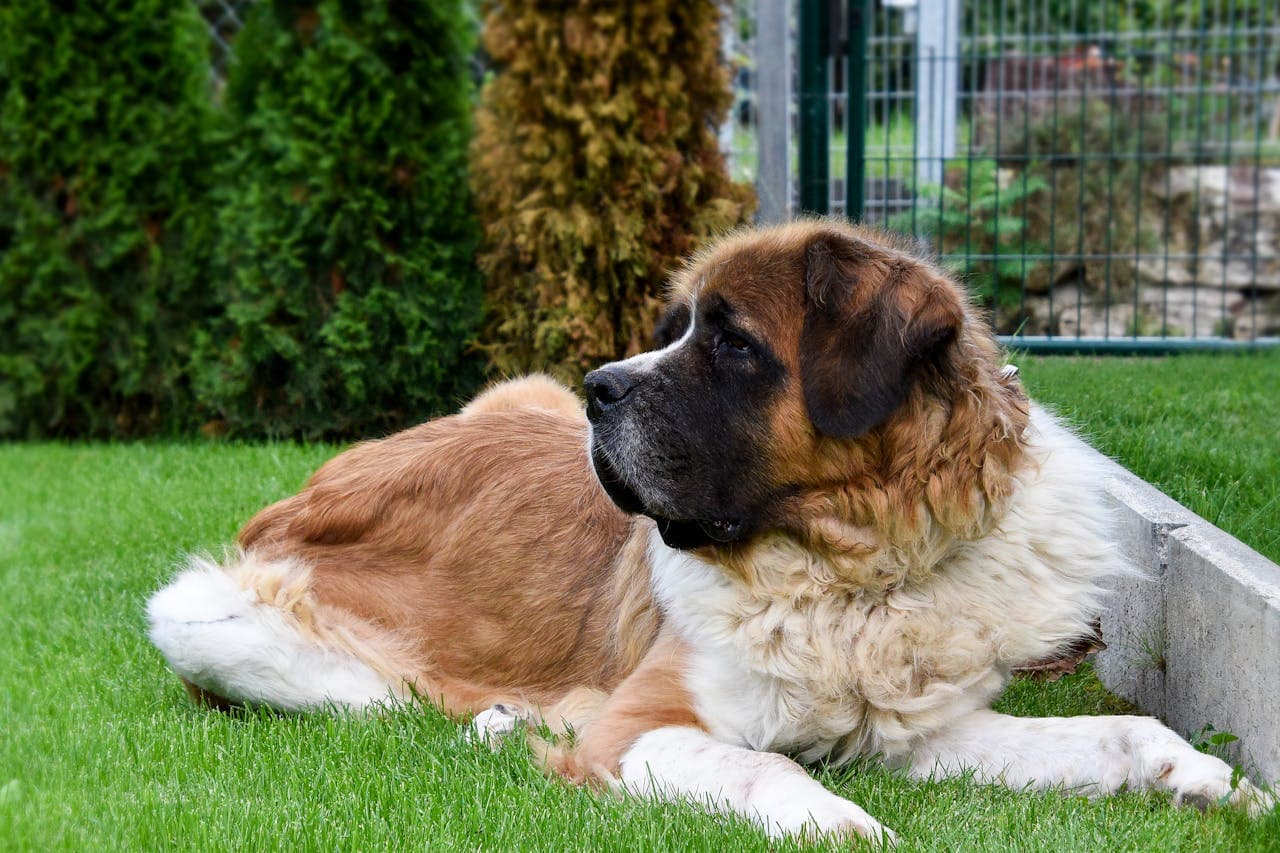
The Saint Bernard is a powerful giant working breed known for its massive size, striking head, and famously gentle, patient nature. Developed in the Swiss Alps as a hospice and rescue dog along the dangerous Great St. Bernard Pass, these dogs were bred to withstand harsh mountain conditions, find lost travelers, and provide companionship and protection to monks and wayfarers alike.
According to the American Kennel Club (AKC), Saint Bernards are among the most recognizable giant breeds in the world. Their popularity stems from their calm, kind disposition and strong bond with their families. While they are often described as "gentle giants," they are still powerful, working-bred dogs who require thoughtful training, appropriate exercise, and careful management of their joints, weight, and overall health.
Breed History & Origin
The Saint Bernard traces its roots to the Great St. Bernard Hospice, a travelers' refuge founded by monks in the Western Alps near the Italian–Swiss border. By the 17th century, large farm and guardian dogs from the surrounding valleys were being kept at the hospice, where they were developed into powerful, surefooted dogs capable of navigating deep snow, rough terrain, and treacherous mountain passes. These dogs became renowned for locating lost or injured travelers and assisting the monks in rescue work.
Over time, these hospice dogs were refined into what we now recognize as the Saint Bernard. Famous rescue dogs like "Barry" reportedly saved dozens of lives and helped cement the breed's legendary status. In the 19th century, crosses with other large breeds such as the Newfoundland were likely introduced to improve coat type and size, particularly for the longhaired variety. The AKC recognized the Saint Bernard in 1885, and today the Saint Bernard Club of America serves as the parent club. Modern Saints are primarily family companions and show dogs but still retain their working heritage and impressive presence.
Physical Characteristics & Breed Standards
Saint Bernards are giant, strongly built dogs with a powerful, muscular body and deep, broad chest. According to the AKC breed standard, they should appear substantial and balanced rather than clumsy, with a firm topline, strong bone, and overall symmetry. Their massive head, dark mask, and expressive eyes give them a dignified yet kindly appearance, while their smooth, ground-covering gait reflects their original purpose as mountain rescue and draft dogs.
| Characteristic | Male | Female |
|---|---|---|
| Height | 28–30 inches (minimum 28 inches) | 26–28 inches (minimum 26 inches) |
| Weight | ~140–180+ pounds (kept lean for health) | ~120–140+ pounds (kept lean for health) |
| Lifespan | 8–10 years (with good care and weight management) | |
| Coat Type | Dense, weather-resistant double coat; smooth (short) or rough (long) with feathering | |
| Common Colors | White with red, red-brown, or brindle patches; typically with dark facial mask and white blaze, chest, feet, and tail tip | |
Key Physical Features: Saint Bernards have a massive, broad head with a short muzzle, well-developed stop, and a slightly furrowed forehead that contributes to their thoughtful expression. Eyes are medium-sized, set moderately deep, and dark brown, often framed by a dark mask. Ears are medium in size, high set, and lie close to the cheeks. The powerful neck and deep chest give way to a strong, level back and muscular hindquarters. Their movement should be effortless, strong, and coordinated, never clumsy or labored despite their size.
Temperament & Personality
Saint Bernards are famous for their gentle, calm, and affectionate temperament. Often described as patient and tolerant, they tend to form deep bonds with their families and are especially fond of children when properly socialized and supervised. Despite their imposing appearance, well-bred Saints are typically friendly and trustworthy, with a stable, even-tempered disposition.
Many Saint Bernards have a natural sense of responsibility and will position themselves between their people and perceived threats, making them effective deterrents without needing to be overtly aggressive. They may be reserved or slightly aloof with strangers but should not be fearful or reactive. Early socialization helps ensure they grow into confident, well-mannered adults who can handle visitors, busy environments, and travel calmly.
While they are not high-strung or hyperactive, Saints are powerful and sometimes slow to mature mentally and physically. Young Saint Bernards can be clumsy "big puppies" who do not yet realize their size, so consistent training, gentle boundaries, and supervision are essential. Owners must also be comfortable with drool, shedding, and the day-to-day management that comes with living with a giant dog.
Exercise Requirements by Life Stage
As a giant working breed, the Saint Bernard requires regular, moderate exercise to maintain muscle tone, joint health, and mental well-being. However, their growing bones and joints are vulnerable to over-exertion during puppyhood, and adults are sensitive to heat because of their size and thick coats. Exercise should focus on steady, low-impact activities rather than intense running or jumping, especially on hard or slippery surfaces.
| Life Stage | Daily Exercise | Recommended Activities |
|---|---|---|
| Puppies (8 weeks - 18 months) | Short, frequent sessions; 5 minutes per month of age, 2x daily (low impact only) | Gentle leash walks, controlled play on soft surfaces, basic obedience, socialization; avoid long runs, stairs, and jumping |
| Adults (18 months–7 years) | 45–75 minutes total, split into 2–3 sessions | Leashed walks, easy hikes, supervised off-leash time in secure areas, light carting or draft work, nosework, low-impact games |
| Seniors (7+ years) | 20–45 minutes of gentle activity, adjusted for mobility | Short walks, swimming (if they enjoy it), gentle play, puzzle games, and scent-based enrichment |
Mental Exercise: Saint Bernards benefit from mental enrichment just as much as physical activity. They enjoy problem-solving tasks, nosework, and interactive games that allow them to use their brains without excessive physical strain. Training sessions that focus on manners, basic obedience, and calm cooperative care (like grooming and handling) are especially valuable for such a large breed.
Grooming & Maintenance Schedule
Saint Bernards have a dense double coat that provides insulation against cold weather and can be either smooth (short-haired) or rough (long-haired). Both coat types shed heavily, particularly during seasonal shedding periods. In addition to coat care, owners must be prepared to manage drool, keep the face clean, and maintain the nails, ears, and teeth of this giant companion. Routine grooming helps control shedding and keeps the dog comfortable and odor-free.
| Grooming Task | Frequency | Tools/Notes |
|---|---|---|
| Brushing (regular season) | 2–3 times per week | Slicker or pin brush, undercoat rake; focus on pants, chest, tail, and behind ears to prevent mats |
| Brushing (shedding season) | Daily or every other day | Undercoat rake, de-shedding tool, thorough line brushing to remove loose undercoat |
| Bathing | Every 6–8 weeks or as needed | Large-breed-friendly bathing setup; dog-specific shampoo and conditioner; rinse thoroughly to avoid skin irritation |
| Nail trimming | Every 2–3 weeks | Heavy-duty clippers or grinder; nails should not click loudly on hard floors or alter gait |
| Ear cleaning | Weekly check, clean as needed | Veterinary ear cleaner, cotton balls; monitor for redness, odor, or head shaking |
| Dental care | Daily (ideal) or at least 3x per week | Dog toothbrush and toothpaste; consider dental chews or rinses as recommended by your vet |
| Face & drool cleanup | Daily, often multiple times a day | Soft cloths or towels to wipe mouth folds and drool; helps prevent irritation and odor |
Nutrition & Feeding Guidelines
Proper nutrition is critical to support the Saint Bernard's rapid growth in puppyhood, large frame, and joint health throughout life. As a giant breed, Saints do best on controlled-growth diets formulated for large or giant-breed puppies and adults, with careful attention to calories, calcium, and phosphorus levels. Maintaining a lean body condition is one of the most important things you can do to help prevent orthopedic problems and extend your Saint's life expectancy.
| Life Stage | Protein | Fat | Daily Amount (Dry Food) | Meals/Day |
|---|---|---|---|---|
| Puppies (2–18 months, large/giant-breed formula) | 22–26% | 10–15% | Varies greatly by age and weight; follow large-breed feeding guidelines and veterinary advice | 3 (younger pups) decreasing to 2 meals/day as they mature |
| Adults (moderately active) | 18–24% | 8–12% | Often ~4–6 cups daily (split), depending on weight, metabolism, and food calorie density | 2 |
| Adults (highly active/working or very cold climate) | 22–28% | 12–18% | Adjust upward from baseline while monitoring body condition closely | 2–3 |
| Seniors (7+ years) | 18–22% (with adequate high-quality protein) | 8–12% | Typically 3–5 cups, tailored to mobility, weight, and underlying health | 2 |
Essential Nutritional Considerations: Look for large- or giant-breed formulas that list high-quality animal proteins (such as chicken, beef, lamb, or fish) as the first ingredient and that are specifically designed for controlled growth and joint support. Omega-3 fatty acids (particularly from fish oil) support joint, heart, and skin health. Many Saint Bernards benefit from joint supplements containing glucosamine, chondroitin, or green-lipped mussel, especially as they age or if they have orthopedic concerns. Always consult your veterinarian before adding supplements or making major dietary changes.
Bloat Prevention (GDV): Saint Bernards, like many deep-chested giant breeds, are at increased risk for gastric dilatation-volvulus (GDV or bloat), a life-threatening emergency where the stomach fills with gas and can twist. To help reduce risk, divide daily food into two or more meals, discourage rapid gulping of food (slow-feeder bowls can help), avoid heavy exercise or rough play for at least an hour before and after meals, and discuss the option of a preventive gastropexy surgery with your veterinarian. Seek emergency veterinary care immediately if you notice signs such as a distended abdomen, unproductive retching, restlessness, or sudden collapse.
Health Considerations & Genetic Screening
Saint Bernards are generally good-natured, hardy dogs, but like all purebred breeds—especially giant ones—they are predisposed to specific health concerns. Responsible breeders use health testing, careful selection, and conscientious management of growth and weight to reduce risk. Prospective owners should be familiar with common health issues in the breed and always request documentation of health clearances for the parents of any puppy they are considering.
Common Health Conditions
| Condition | Prevalence | Description |
|---|---|---|
| Hip Dysplasia | Significant breed risk in giant dogs | Abnormal development of the hip joint that can lead to arthritis, pain, and reduced mobility; managed with weight control, joint care, and sometimes surgery |
| Elbow Dysplasia | Recognized concern in large/giant breeds | Developmental abnormalities in the elbow joint causing lameness, pain, and early-onset arthritis |
| Gastric Dilatation-Volvulus (GDV/Bloat) | High-risk emergency condition in the breed | Sudden stomach distension and possible twisting; requires immediate veterinary intervention and often surgery; preventive gastropexy may be recommended |
| Cardiac Disease (e.g., Dilated Cardiomyopathy) | Notable concern in some lines | Enlargement and weakening of the heart muscle that can lead to arrhythmias, reduced stamina, and congestive heart failure |
| Eye Conditions (Entropion/Ectropion, Cataracts, etc.) | Recognized breed concern | Abnormal eyelid conformation or inherited eye diseases that can cause irritation, discharge, or vision changes; some require surgical correction |
| Osteosarcoma & Other Orthopedic Issues | Seen in large/giant breeds, including Saints | Bone cancer (osteosarcoma) and other joint-related disorders may occur; early detection and weight management are important for mobility and comfort |
AKC Recommended Health Screenings
The AKC and Saint Bernard parent club recommend specific health testing for breeding dogs. Always ask breeders for official health clearances and verify them through trusted registries when possible:
| Screening Test | Testing Authority | Purpose |
|---|---|---|
| Hip Evaluation | OFA or PennHIP | Screen for hip dysplasia and assess hip joint quality prior to breeding |
| Elbow Evaluation | OFA | Screen for elbow dysplasia and developmental abnormalities |
| Cardiac Evaluation | OFA, board-certified veterinary cardiologist | Screen for congenital and acquired heart disease, including dilated cardiomyopathy |
| Ophthalmologist Evaluation | ACVO/OFA Eye Certification | Screen for hereditary eye diseases and eyelid conformational issues (entropion/ectropion) |
| Thyroid Evaluation (when indicated) | OFA or certified laboratory | Screen for autoimmune thyroid disease and hypothyroidism, which can affect coat, weight, and energy levels |
Training & Socialization
Saint Bernards are intelligent, eager-to-please dogs, but they can also be independent and slow to mature. Their size makes early training non-negotiable—behaviors that seem cute in a 20-pound puppy can be dangerous or unmanageable in a 150-pound adult. Fortunately, most Saints respond beautifully to kind, consistent training that emphasizes clarity, patience, and positive reinforcement.
Early Socialization: Begin socialization as early as possible, ideally between 3–14 weeks of age. Safely expose your Saint Bernard puppy to a variety of people, friendly dogs, children, surfaces, sounds, grooming procedures, and environments. Focus on calm, positive interactions rather than overwhelming stimulation. Good socialization helps prevent fearfulness and reduces the risk that a large dog will become overly suspicious or reactive as an adult.
Training Approach: Positive reinforcement—using food rewards, praise, toys, and affection—is the most effective and fair way to train Saint Bernards. They are sensitive to tone and can shut down in response to harsh corrections or yelling. Short, engaging sessions that emphasize manners (no jumping, polite greeting, loose-leash walking, "leave it," and reliable recall) are far more successful than long, repetitive drills. Teaching cooperative care (standing still for grooming, lifting paws, opening the mouth) is especially important for veterinary and grooming visits.
Recommended Training Programs: Puppy kindergarten, basic obedience, and programs such as AKC S.T.A.R. Puppy and Canine Good Citizen (CGC) are excellent foundations for Saint Bernards. While they may not be as fast as some breeds in high-speed sports, many Saints enjoy therapy dog work, nosework, drafting/carting, and other activities that match their calm, steady nature. Prioritizing impulse control, reliability around children and visitors, and safe leash manners should be at the top of every Saint Bernard owner's list.
Working Roles & Capabilities
Historically, Saint Bernards were alpine rescue dogs, farm guardians, and cart-pulling companions. While most modern Saints live primarily as family pets, their temperament and physical traits still lend themselves to a variety of meaningful roles:
- Search & Rescue (Historical Role): Saint Bernards were once famous for locating lost travelers and providing warmth and companionship in harsh mountain conditions. Today, some Saints still participate in search and rescue or tracking as a nod to that heritage.
- Draft & Carting Work: Their strength and steady nature make them excellent candidates for draft work, pulling carts or wagons in parades, demonstrations, or recreational events when properly conditioned and trained.
- Therapy & Emotional Support: Many Saint Bernards have a naturally calm, patient demeanor that is well-suited to therapy dog work in hospitals, nursing homes, and schools, provided they are well-socialized and reliably trained.
- Companion & Family Dog: For most owners, a Saint Bernard's primary job is being a devoted household companion—joining family movie nights, relaxing at home, and providing a reassuring presence during daily life.
- Show & Conformation: Some Saints participate in conformation shows, where they are evaluated against the breed standard and contribute to responsible breeding programs focused on health, structure, and temperament.
Frequently Asked Questions
Are Saint Bernards good family dogs?
Yes, Saint Bernards can make excellent family dogs in homes that understand and can manage their size, drool, and grooming needs. They are typically affectionate, patient, and gentle with children when properly socialized and supervised. However, because of their large size and strength, interactions with small children should always be supervised, and children must be taught how to interact respectfully with such a big dog.
How much does a Saint Bernard puppy cost?
Prices vary widely depending on region, breeder reputation, and whether the puppy comes from show, working, or companion lines. From responsible breeders who perform recommended health testing and raise puppies in a high-quality environment, Saint Bernard puppies often range from around $1,500–$3,000 or more. Puppies from top show or breeding lines may cost more. Be cautious of unusually low prices, which can signal poor breeding practices, lack of health testing, or substandard living conditions.
Do Saint Bernards shed a lot?
Yes. Saint Bernards are heavy shedders, especially during seasonal coat blows when they lose large amounts of undercoat. Both smooth and rough coats shed; the rough coat simply makes hair more visible. Regular brushing several times a week—daily during shedding seasons—helps manage loose fur, reduce mats, and keep the skin and coat healthy. Prospective owners should be comfortable with dog hair on clothing, furniture, and in the home.
Are Saint Bernards aggressive?
Well-bred and well-socialized Saint Bernards are generally not aggressive. The breed standard calls for a gentle, friendly, and calm temperament. They may act as natural deterrents simply due to their size and deep bark, but overt aggression is not typical of the breed. As with any dog, inadequate socialization, poor training, pain, fear, or irresponsible breeding can contribute to behavior problems. Early positive training and responsible ownership are key to a stable temperament.
Can Saint Bernards live in apartments?
Apartment living with a Saint Bernard is possible but challenging and requires a highly committed owner. These dogs are large, heavy, and not well-suited to numerous stairs or cramped spaces. They also need regular outdoor walks, a cool environment (especially in warm climates), and room to move comfortably. An apartment-dwelling Saint Bernard must receive multiple daily walks, mental enrichment, and careful management of drool and shedding. Access to elevators, nearby green spaces, and air conditioning can make apartment life more realistic.
What is the difference between rough and smooth coat Saint Bernards?
Both rough and smooth coats are recognized varieties of the Saint Bernard. Rough-coated Saints have longer hair with feathering on the legs, tail, chest, and around the neck, giving them a more "fluffy" appearance. Smooth-coated Saints have shorter, dense hair that lies closer to the body. Both coat types shed heavily, and both require regular grooming. Coat type is largely a matter of personal preference, though some owners find the smooth coat slightly easier to maintain and less prone to matting.
Is a Saint Bernard Right for You?
Saint Bernards are best suited for:
- Families or individuals who appreciate a calm, affectionate giant companion
- Owners who can manage and afford the costs associated with large-breed care (food, grooming, medical, and equipment)
- People committed to early training and socialization to ensure safe, polite behavior from a very large dog
- Homes with enough space for a giant dog to move around comfortably and rest without being underfoot
- Owners who live in cooler climates or have access to air conditioning and can protect their dog from heat
- People comfortable with drool, shedding, and regular grooming and cleaning routines
- Families who want a gentle, loyal, and steady companion more than a high-energy sporting or working partner
A Saint Bernard may not be ideal for people who prefer a low-maintenance, low-shedding dog; those who are frequently away from home and cannot provide regular companionship; or households without the physical space or budget to support a giant breed. With appropriate care, training, and environment, a Saint Bernard can be an incredibly loving, loyal, and comforting presence in your life.
References & Resources
- 1. American Kennel Club (AKC). "Saint Bernard Breed Standard." akc.org
- 2. Saint Bernard Club of America (SBCA). "Breed Information & Health."
- 3. Orthopedic Foundation for Animals (OFA). "Breed Statistics for Saint Bernards."
- 4. AKC Canine Health Foundation. "Gastric Dilatation-Volvulus (Bloat) in Large & Giant-Breed Dogs."
- 5. Veterinary cardiology and orthopedic resources on giant-breed heart and joint health management.
- 6. Veterinary nutrition resources on feeding large and giant-breed puppies and adults for joint health.
- 7. SBCA & responsible breeder guidelines on health testing and breed stewardship.